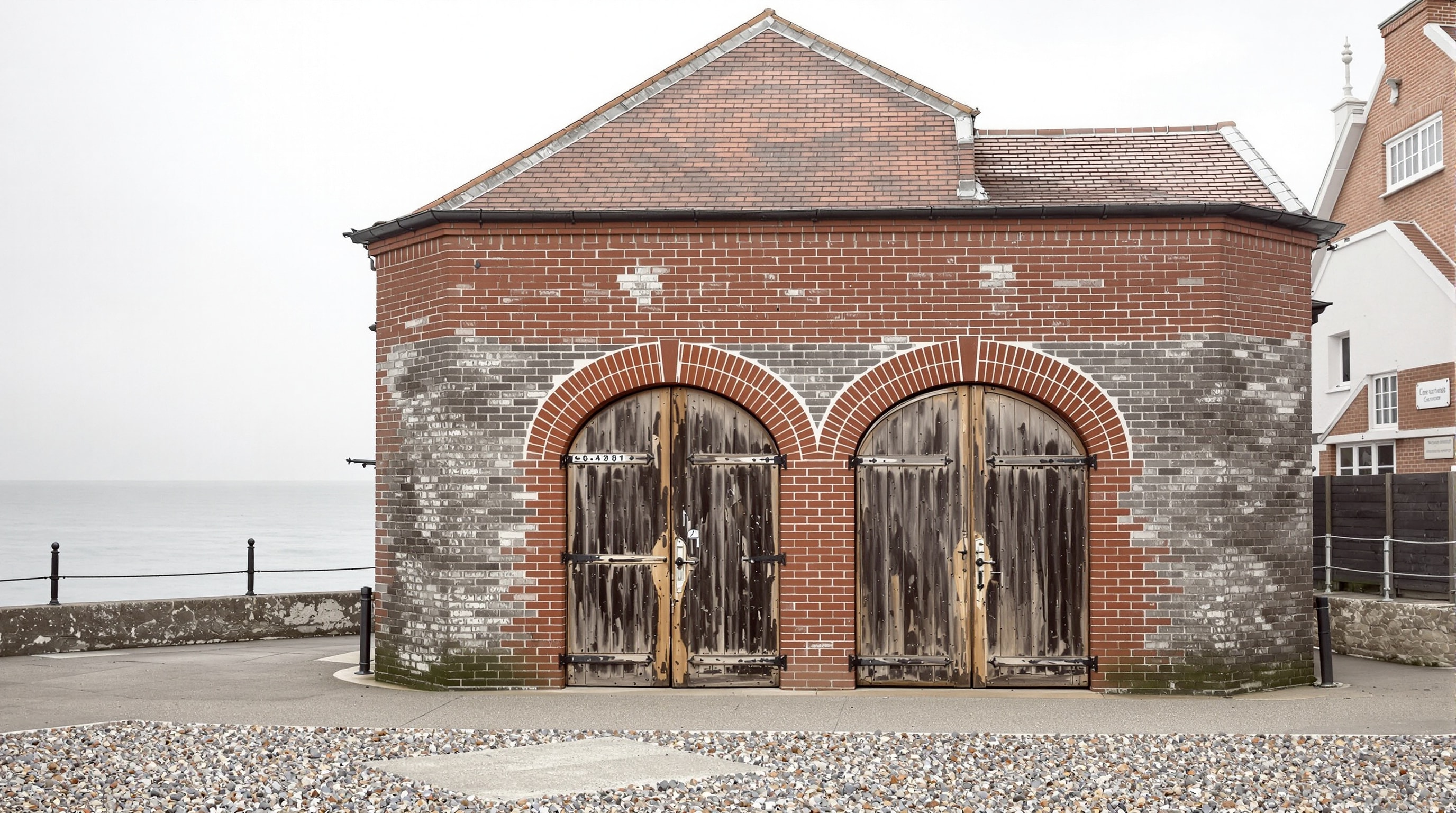
A boathouse built in memory of an actor
The building began life in 1898 as the William Terriss Memorial Lifeboat House. It was paid for by a public subscription raised through the Daily Telegraph in memory of William Terriss, one of the most popular actors of the late-Victorian stage, who was killed outside a London theatre in 1897. That a grieving public chose to commemorate a beloved performer by funding a working lifeboat house says a great deal about how the Victorians felt about the volunteers who put to sea to save strangers.
The boathouse served its original purpose for some twenty-six years, sheltering the town’s lifeboat and launching it down the beach when the maroons were fired. When the station’s arrangements changed in the 1920s, the building found a second life — as a keeper of memory rather than of boats.
The first lifeboat museum in the country
In 1937 the old boathouse reopened as a museum devoted to the history of Eastbourne’s lifeboats. It was the first of its kind in Britain, and it has drawn visitors from around the world ever since. A thorough refurbishment in 2011 renewed the displays while keeping the building’s heritage character, and a souvenir shop attached to the museum has long been one of the best-performing outlets raising funds in support of the lifeboat service.
Inside, the collections trace the town’s rescue story from 1822 onward — the year the first Eastbourne lifeboat, a ten-oared boat known variously as the Samaritan or The Rose, came on the scene. That first boat was the gift of a colourful local landowner, and it served until 1863. You can read the full station history for the boats and crews that followed.
What the collection remembers
Among the stories the museum preserves are some of the most dramatic in the town’s maritime past:
- The 1833 “New Brunswick” service, when the lifeboat was hauled overland by relays of horses to Birling Gap — some eight miles — before it could even be launched into the surf.
- The retired lifeboat James Stevens No. 6, placed inside the boathouse as an exhibit in 1924 — later sold to a local fishing family and put to work as a beach pleasure boat.
- The wartime service of the Jane Holland, one of the “little ships” associated with the Dunkirk evacuation.
- The 1966 rescue of a lighthouse keeper, and the medal-winning service to the yacht Paperchase in 2002 — the most recent of the town’s gallantry awards.
These are the medal services and everyday launches that add up to a two-century record of volunteering. The museum’s medal tally alone tells the story: ten RNLI medals for gallantry — one Gold, four Silver and five Bronze — won by Eastbourne crews over the years.
A listed piece of seafront heritage
The memorial boathouse is a genuine piece of Victorian seaside architecture, and buildings of this kind are recorded on Historic England’s National Heritage List. It sits within an easy walk of the pier and the wider seafront, making it a natural stop on any heritage stroll along the front. If the sea is what draws you to Eastbourne, this small museum is the best place to understand why the town has never taken the Channel for granted.