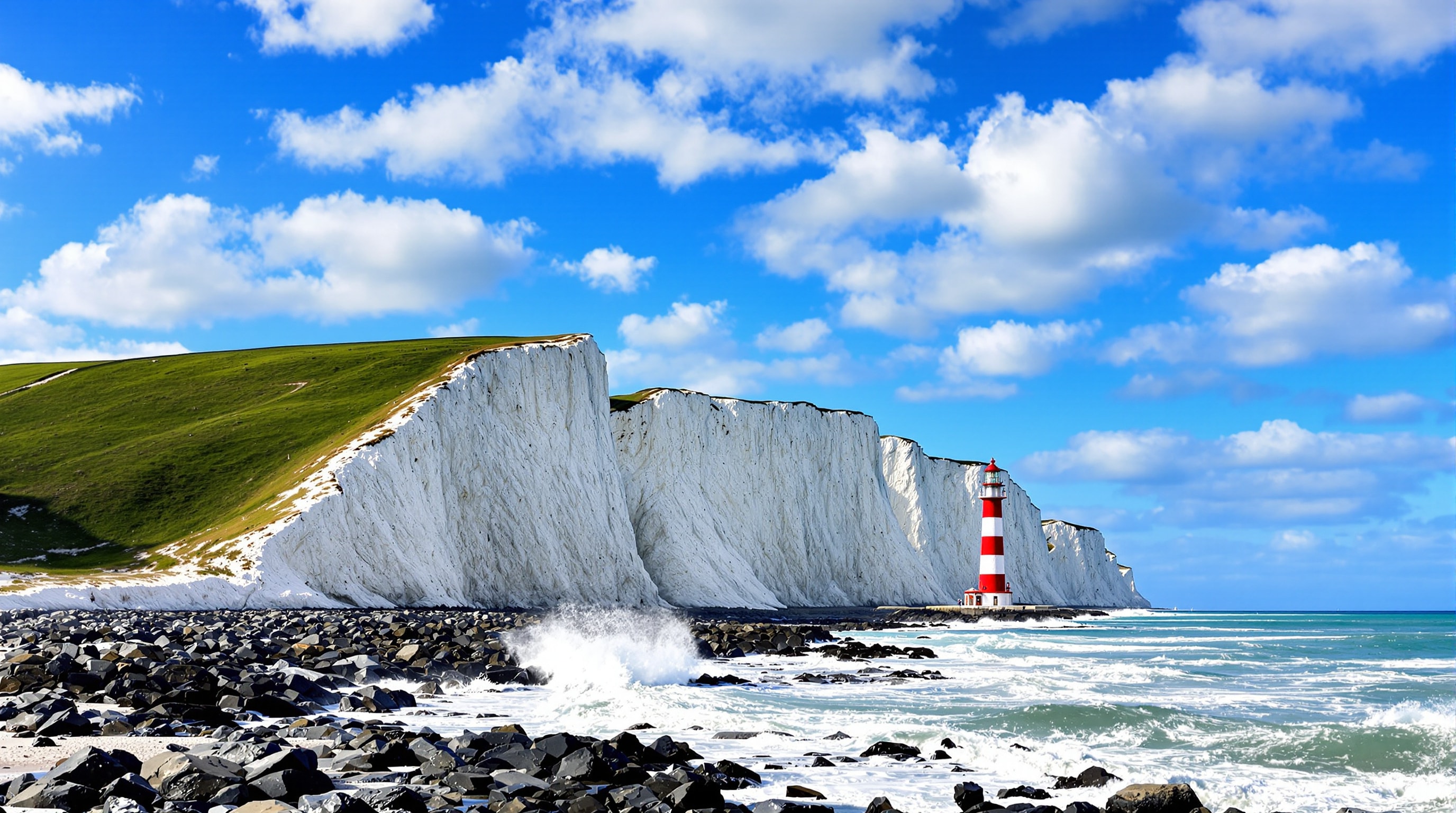
A wall of chalk above the Channel
The cliffs between Eastbourne and Birling Gap are the seaward end of the South Downs, where the rolling chalk hills are cut off sheer by the sea. Beachy Head itself is a landmark for ships in the English Channel and a magnet for walkers on the clifftop path. The views are magnificent — and the drop is unforgiving. The chalk is soft and constantly eroding, so the very edge is never as solid as it looks, and rockfalls onto the beach below are frequent.
Much of this coastline is protected landscape, cared for in part by the National Trust, and it forms part of a designated Area of Outstanding Natural Beauty. That protection is one reason the clifftop remains open and wild rather than fenced and tamed — which makes personal care all the more important.
The lighthouse at the foot of the cliff
The red-and-white striped Beachy Head Lighthouse, standing in the sea at the base of the headland, is one of the most photographed structures on the south coast. It was built in the early twentieth century to replace an older light higher up the cliff — the “Belle Tout” lighthouse — whose beam was too often lost in the sea mist that clings to the chalk. The lighthouse is maintained by Trinity House, the general lighthouse authority for England and Wales, and remains an active aid to navigation for the busy shipping lanes offshore.
Birling Gap and a history of wrecks
A little further west, the cliffs dip at Birling Gap, one of the few places where you can reach the beach by a steep set of steps. In the age of sail this dip in the cliffs was both a landing place and a graveyard: many of the historic shipwreck rescues in Eastbourne’s medal record happened here, from the brig Juno in 1824 to the barque New Brunswick in 1883. When a lifeboat could not be launched into the surf at the town, crews sometimes hauled it overland to Birling Gap to reach a stricken ship.
The tides run hard along this coast and the beach at Birling Gap is cut off at high water, so what looks like a simple stroll at low tide can become a trap as the sea returns. This is exactly the ground where our advice on tides and currents matters most.
Enjoy it — and respect it
Beachy Head rewards anyone who walks it with some of the finest coastal scenery in the country. To enjoy it safely, stay well back from the crumbling edge, keep dogs and children close, check the tide before you go down to any beach beneath the cliffs, and never try to climb the chalk. If you see someone in difficulty on the cliffs or in the water, dial 999 and ask for the Coastguard. Our coastal safety page sets out the essentials in full.
If you or someone you know is struggling to cope, the Beachy Head area is served by dedicated support services and the Samaritans can be reached free, at any time, on 116 123.